Why the gap between two cities moves
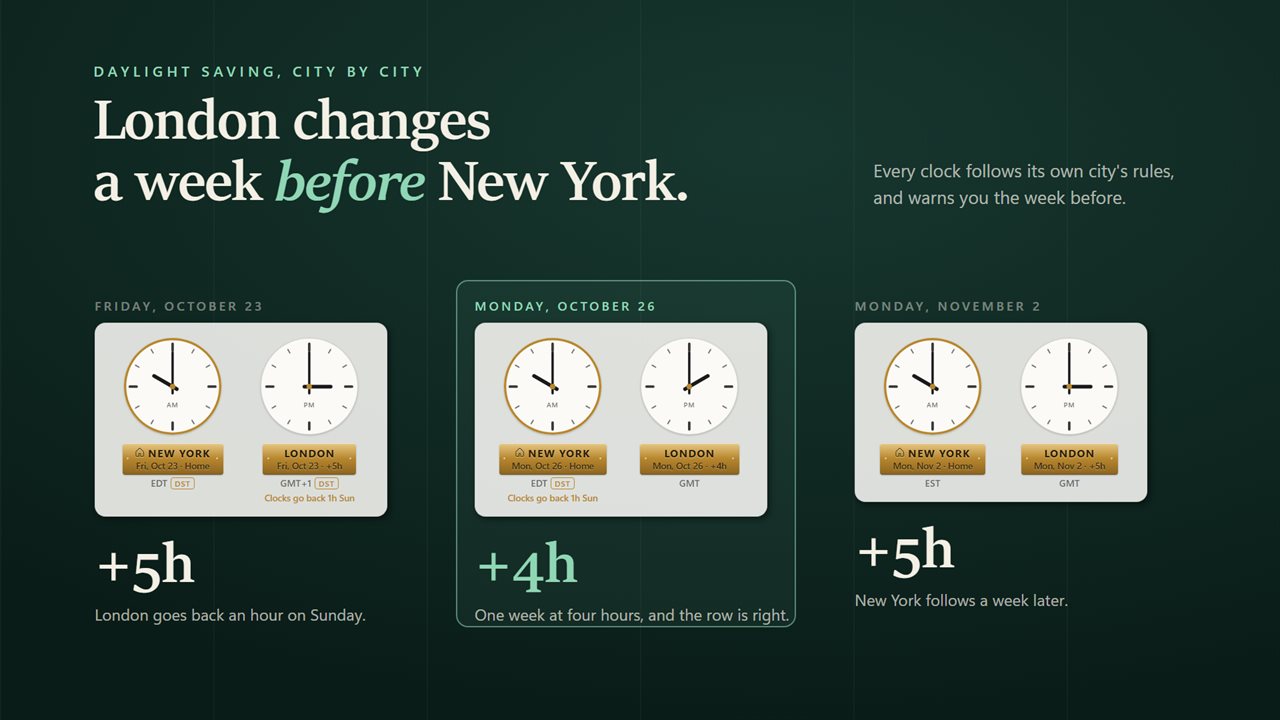
Not every country changes its clocks on the same day. The United States moves forward on the second Sunday in March and back on the first Sunday in November. Most of Europe moves on the last Sundays of March and October. Countries in the southern hemisphere go the other way, and places like India, Japan and most of Arizona never change at all.
So the difference between two cities is not a fixed number. London and New York are usually five hours apart, but for a few weeks each spring and fall it is four. A world clock that adds a fixed offset, or follows your own PC's daylight saving, is wrong for part of the year.
Each clock here follows the time zone rules for its own city, so it changes when that city changes, and the hours it shows from home are right on every date.
How to add a world clock widget to your Windows desktop
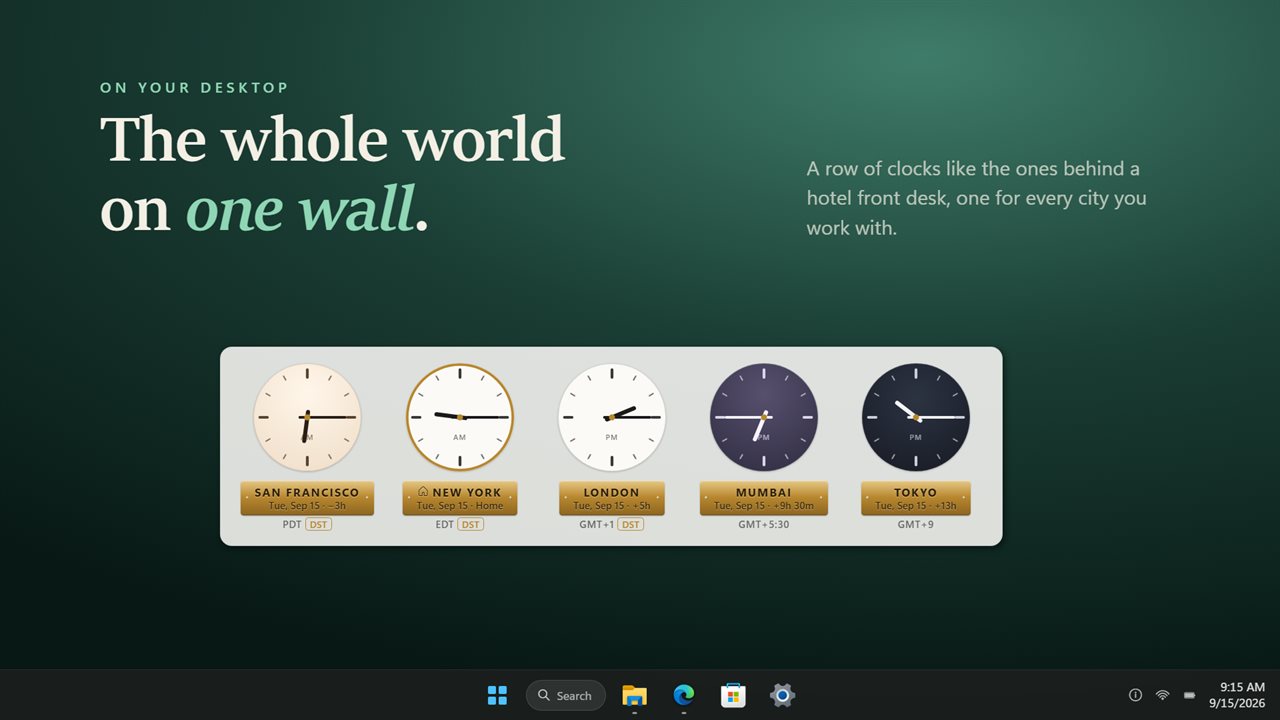
All of your clocks live in one widget on the desktop. You add places in the settings window, then choose how the row looks and where it sits.
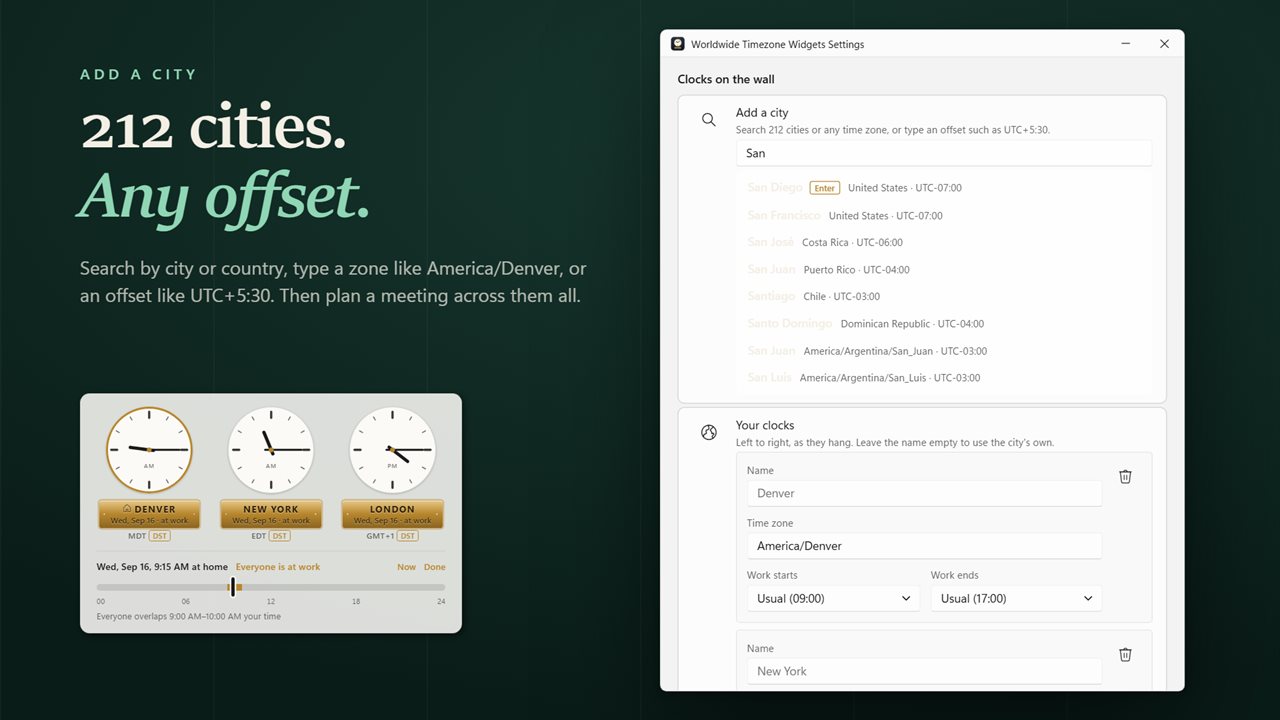
- Search 212 cities by name or country, type a named time zone such as America/Denver, or enter an offset like UTC+5:30.
- Give each clock your own label if you like: a client, an office or a person.
- Mark one clock as home so every other plaque shows how far ahead or behind it is.
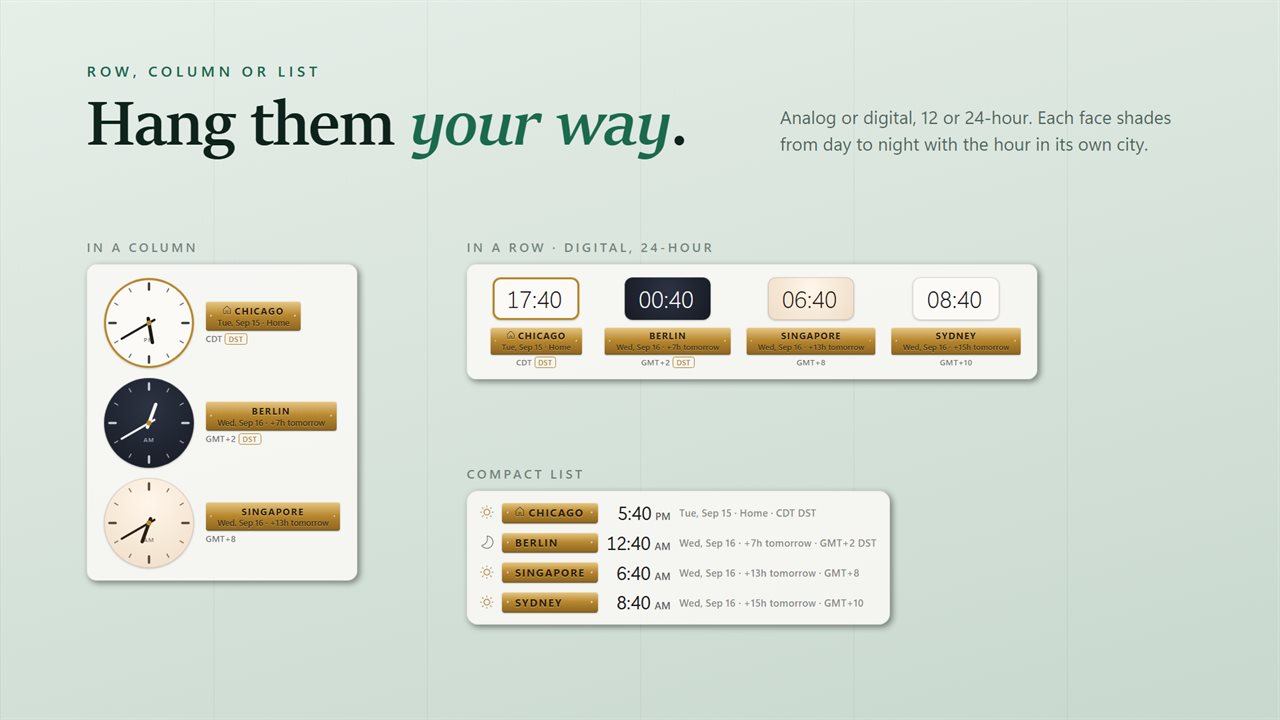
- Pick analog or digital faces, and a row, a column or a compact list.
- Leave it on the wallpaper, or keep it above your other windows, and have it start with Windows.
Finding a meeting time across time zones
Open the meeting planner from the widget's right-click menu and slide through the day. Every clock follows the slider, clocks for cities outside working hours dim, and a brass band marks the hours when everyone is at work.
Set one working day for everyone, then change it for any city whose office starts earlier or finishes later. The band then reflects the hours your teams actually keep, not a standard nine to five.
Reading a time zone widget at a glance
Each face shades through day, dawn, dusk and night with the hour in its own city. You can tell who is likely asleep before you read a single number.
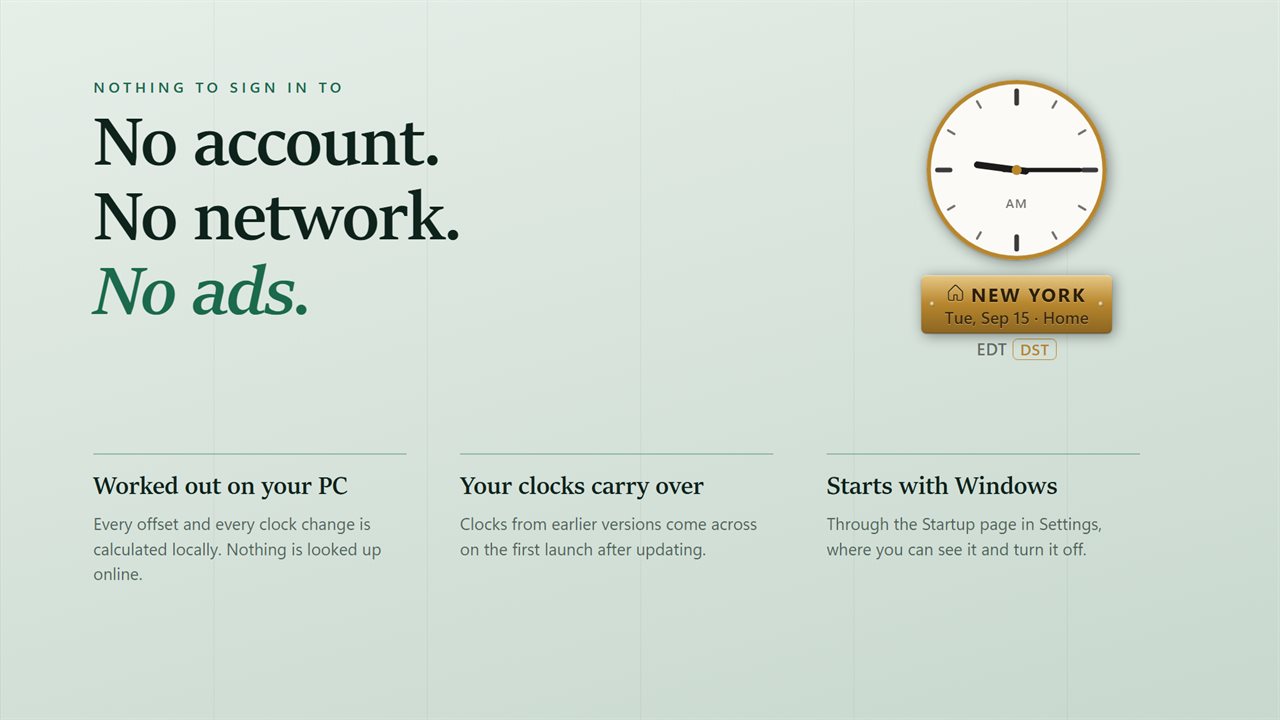
The plaque under each clock carries the rest: the city or your own label, the gap from home, and whether it is already tomorrow there. You can also show seconds, the date and the zone abbreviation, in 12 or 24-hour time, at any size.
A desktop time zone widget that works offline
The time zone rules are built into the app, so every offset and clock change is worked out on your PC. It needs no network and no account to keep the right time for every city.
If you want your clocks on another PC, an optional EvlarSoft ONE sign-in backs up your clocks and settings. Feedback is sent only when you choose to send it, and there are no ads.